পূর্ণলক্ষ্মীর একাল সেকাল (ঊনবিংশতি পর্ব)
পূর্ণলক্ষ্মীর একাল সেকাল (সপ্তদশ পর্ব )
পূর্ণলক্ষ্মীর একাল সেকাল (পঞ্চদশ পর্ব )
পূর্ণলক্ষ্মীর একাল সেকাল (চতুর্দশ পর্ব )
পূর্ণলক্ষ্মীর একাল সেকাল (একাদশ পর্ব )
A Story

Chapter One
A line is a poignant thing. It starts off with a nudge and lingers, readying itself to endless possibilities and confessions: an afternoon of forbidden memories or a desire to do dangerous things as the half dried clothes tremble on the clothing line, or streets tick away towards a dreadful evening. A handy thing at this point is the doorbell, a postman or the maid, startling the dishevelled mistress. Dishevelled inside out. The novel was boring; it rose to a crescendo and then hung limp, for the writer hesitated to pass the amorphous limits into the carnal and the fleshly. How many times that has happened, she wonders.
would it have been better if she spoke? Was it possible to churn out the magical and the mysterious out of a life that was a series of cardboard boxes, substantial, worthy, but devoid of pre-empted colors?
She laughed. Boredom was a fashionable garb of the eighties. She had worn it with pride. There was ammunition, naturally! The drop dead revolution, the irrelevant French Decadents and that enormous feeling of a blossoming womanhood that left you insufficient every inch of the way… from the busy volatile College Street to the innocuous by lanes of South Calcutta. Only, the words had to be found: copious, unabashed and hard to believe.
— “Why do you say such shocking things all the time?”
— “Because I am I am I am”
— “that is a discarded philosophy, passé, smacking of Paris and the dead sixties”
— What are my choices?
— Love me!
— “I collect men with interesting names.”
Loving wasn’t easy. It was unfurling oneself, soul first. That is what she had dreaded all her life. Not the body. That was the easy part. Touchable and dreadfully predictable. The routine pregnancies that happened in her family, the lustreless physical combats that were described by her giggly friends. Love was a much abused word and came as spelling errors in crumpled notes shoved into her palms unwarranted. The worst fear: someone would tear at the veil, would reveal something ugly as a spider that crawled on the damp bathroom wall during the monsoon, more lethal than the crumpled word. That was not Desire.
Poetry was better.
Body was another possibility in her world. She often imagined herself on the delivery table after it was all over – the thick limp pain and the joy of reaching out to a wriggling piece of her own flesh with a round pink mouth. Motherhood was different, she thought; she knew.
As amid the hectic music and cocktail talk
She hears the caustic ticking of the clock.

Chapter II
A European Gone Girl –The Wall Street Journal
“An internationally bestselling phenomenon: the darkly suspenseful, highly controversial tale of two families struggling to make the hardest decision of their lives-all over the course of one meal.
It’s a summer’s evening in Amsterdam, and two couples meet at a fashionable restaurant for dinner. Between mouthfuls of food and over the scrapings of cutlery, the conversation remains a gentle hum of polite discourse. But behind the empty words, terrible things need to be said, and with every forced smile and every new course, the knives are being sharpened.”
That would be a clincher, she thought with a smirk (she hasn’t lost it even after all those years that tried her sense of humor). Just the thing for the cleavage heaving readers resting their tired soul on a pillow during afternoons or insomniac midnights (a pertinent question would be…, but we know better we don’t ask such questions). Only if she could pen those lines: a pretty face and a sad face and some terrible news to be sliced up with steak knives and delivered, mopped clear with the white napkin. No such luck.
–Let us talk
–What about?
–the first thing that comes to our mind.
He was always like that, an attempting intruder who broke down defined walls: from hockey stick to Godot, forging his way in, blending the sportive and the literary. A rich man’s parlor was as good as the crumbling attic that housed wet dreams and Tagore alike; “heterogeneous ideas yoked by violence together” … passion, coercion all blended with ease and emptied out metaphors of clichéd associations.
–Do you love me?
–I don’t know
–You’d better…
Love was not desire. Poetry was better; it was assuring, made you dream of colors. Orange. Pistachio.
Why can’t she ever write a story? Because events did not surge like waves … because things happened that were not meant to be… even when the round pink mouth uttered its first wail, it wasn’t as she had imagined. She was scared of the small bundle that commanded her to take charge.
How does one write a story? “Gustav Freitag’s triangle: first comes the exposition… a pyramid in Cairo,” as she would tell her students.
What if life wasn’t like that? What if there was an unannounced visitor at the door? What if the intensity demanded a poem, not a story?
Middle aged crow feeted eyes looked in the mirror. She crackled and shook her index at the image: “No, for god’s sake; don’t start “Mirror mirror on the wall”…only penny novels did that.
Besides, she hated wetness and all things smudged.
A Definition

“This is not a story to pass on”, she thought. It was about the toxicity of silence. She loved that phrase. Crooked. Ominous. Dark. Befitting. Growing up in the seventies wasn’t easy…lean, mean and hungry times, when parents whispered, thinking the girl was asleep. The night outside and the street lights were ready and waiting for the shuffling under the windows, a shrill whistle… a few rat-a-tat-tats… and then…
Mornings would wake up to the known rhythm: the early morning knock on the door and the arrival of Shyamoli Didi, who had a complex role to play in her mother’s life. She was a little more than the maid who did the stale dishes, cooked and cleaned. She brought in shards from the outside world and fed an averagely curious woman’s thirst for sharing other lives; then there was the newspaper man sliding The Statesman under the door. The father had some strange notions about a competing Bengali newspaper and it never saw the light of day at 8/E Chandra Mandal Lane. “This isn’t Bengali” was the verdict passed. The clock worked its way up to 7.30 a.m. The red ribbons were tightly secured to the two curly tufts of hair that her mother called ‘a head of jungles’. That being done, the white uniform and the red belt, shoes and socks and the march to the Park and a short wait for the dark chocolate bus to arrive. Ramlagan, the multitasking Man Friday of the school opening the bus door with a wide smile that betrayed the betel abused teeth, happy, gleeful . But that was a sunny interlude and gave the lie to what befell the previous night oftentimes. A scurry just under her windows past midnight and her mother’s cold hand reaching out under the mosquito net to cover her mouth. ‘Shhh..” then the noise of some heavy boots… a sharp whistle, perhaps?
Rat- a –tat-tat
Rat -a- tat -tat-
and then Darkness in the face of the Deep… but that was a phrase she had learnt much later. That was another story. The next morning was toxicity of silence. The ribbons were tied. Father’s face looked dark as he turned the pages of the newspaper.
— Do not look around, go straight to the bus stop .Don’t talk to anyone!
Silence.
The street that led up to the bus stop was unusually quiet. Umesh-da’s stationary shop was closed. The tea shanty just opposite had a small cluster of unshaven old faces over steaming dirty gasses of orange-ish tea. Did the street look extra clean, washed, as it were? the not-quite-boys, who attempted to sing Bengali film songs on her appearance in the street and made her draw a deep breath were missing too. The strangeness in the street brought back some broken lines that she had overheard between Shyamali didi and Ma.
–Last night.
–How many?
— don’t know…
–in front of Tollygunj Police Station.
Rest had been smothered by the hissing cooker in the kitchen and the tinkle of spoons and ladles.
Comrade. A strange word she had learnt to fear in those days. It wasn’t quite the printed word for her. They were graffitis in the mornings that suddenly grew up at nights and showed their claws and fangs on walls the next morning, all along the walk to the Bus Stop, with a promise that sounded like a threat: Memory was for ever. Comrade Amitava, Comrade Laltu, Comrade Ranajit.. sprawled in black and scarlet…Laal Salaam.. that blob of red bothered her .. She had learnt somehow to relate colors to the whispers in the kitchen deaf-mute. Synaesthesia …another word she had fallen in love with a little later.
***
Life otherwise was not too bad. That is, when there were no shuffling feet under the windows, when the helmeted CRPs did not punctuate Rashbehari Avenue on surprised afternoons and made all crossings self conscious and furtive.
Good times, when grandmothers held her chin and told her that a prince must be lurking somewhere. Princes didn’t look like men. They were strange boyish creatures, straight from fairy tales and folklores and fused incompatible seas and mountains: Wales, Denmark, Bengal, Mymensingh . They rode horses at night, sported ornate swords. They rode the seven seas, fought the demons… rescued girls who had red ribbons dangling from their hair jungle.
Next morning it so chanced that the king of that country came to that forest to hunt. As he was pursuing a stag, which he had pierced with an arrow, he came across the king and the lady of peerless beauty. Struck with the matchless beauty of the lady, he wished to seize her. He whistled, and in a moment his attendants flocked around him. The lady was made a captive, and her lover, who had brought her from her house on the other side of the seven oceans and thirteen rivers, was not put to death, but his eyes were put out, and he was left alone in the forest—alone, and yet not alone, for the good hiraman was with him.
But all these magical spaces were spun when there was light; when cars honked, trams tingled and little girls and boys opened their lunch boxes during recess to snigger at slices of apples, wilted jam sandwiches or cold omelettes. Days were transparency and quite the elixir. It lingered in the air even when Shyamoli Didi waited for the chocolate bus to open its door and eject a girl with unlaced shoes and a tired schoolbag, late afternoon. Red ribbons hung limp. Evenings were getting ready.Nights were different. Dark. Pregnant, a wait for the shrieking whistle or the distant alarm from a red brick building not too far;
II
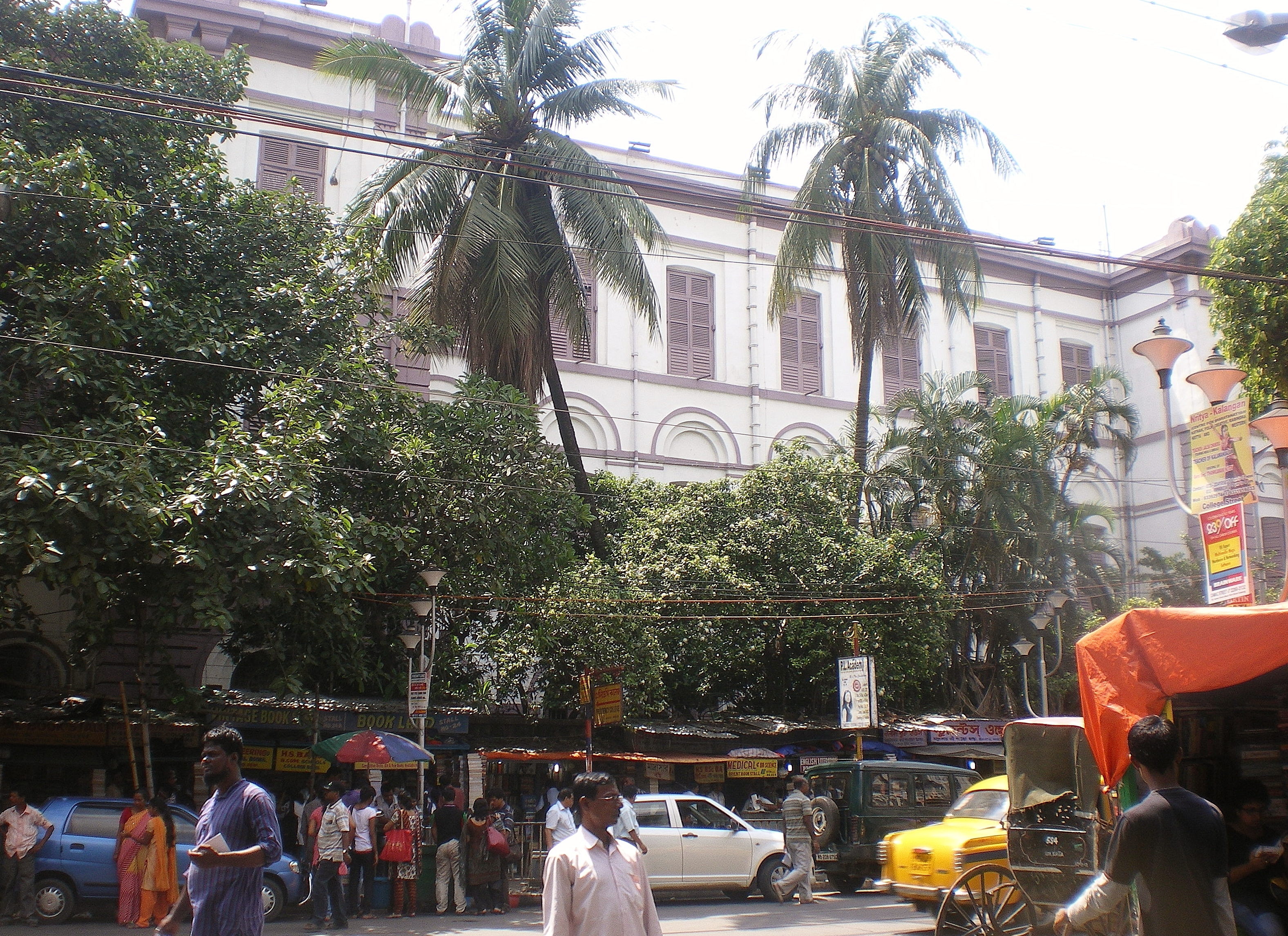
To overcome lies in the heart, in the streets, in the books
from the lullabies of the mothers
to the news report that the speaker reads,
understanding, my love, what a great joy it is,
to understand what is gone and what is on the way.
Hikmat
Urmila-Di lives with a damaged uterus… boiled eggs did that…
‘Understanding’ was a momentous word, like the epitaph or the national anthem at the end of a film … or the cognitive moments in a Greek tragedy: “I understand; therefore, I resign”, she thought.
Looking out of the window she saw Maple leaves turning red on Pickford Street… another metaphor… radiant in Fall. Her hands moved into her cropped greying hair… did she overcome the many lies that she had lived? Or did she nurture them with a secret pleasure, caressing them as she did her teenage face when she had fallen in love with it? “Lies are good”, she thought. They were lullabies, made you long for more. But the strangeness of toxicity bothered her… the graffiti, strange encounters and coded gestures that made up her own existing definitions of tangibility.
How does one purge silence? There was the smoking coffee on the table, and a coffee spoon… the tingle was not quite as toxic as the one she had heard in Ma’s kitchen.
She cradled the silence and she cooed into its years:
‘Thus my story endeth,
The Natiya-thorn withereth”
Dearly Beloved.
Of Food and Other Fallacies (Pages from Kolkata Notebook)

We shall not cease from exploration
And the end of all our exploring
Will be to arrive where we started
And know the place for the first time.
T. S Eliot ‘Little Gidding’
No, this is no philosophy of poetry; this is about food, a culinary mapping of a city that continues to rise out of its ashes. I had a project: to return with a bouquet garni from a busy, bustling city and realized that the project itself has turned into an allegory of Quest. Flury’s sat uneasily by the side of Music World and brought back the soft chicken sandwiches with white bread cut into halves and brushed with plain, honest salted butter. The chicken was bravado itself: salt and black pepper and nothing but. Funny how that taste and smell of freshly done chicken along with the slightly sweet bread reminded me of Kalpana Pradhan and her dainty manicured hands that picked up the sandwich and reached it to her thin lips discreetly; Kalpana munched in a way that made munching a matter of high art. The tea was Darjeeling of course, and came in a pot that wasn’t chipped then, is now. It was a bi-weekly trip for Kalpana and me, just across the Street from Park Mansions, after having learnt the hopeless intricacies of Passé Composé under Monsieur Benôit’s able tutelage… It was breakfast for her, a semi –regal second cousin of Aiswarya, the then queen of Nepal , and adventure for me: a sinful way of wasting middle-class money that was hard earned: teaching High School students the difference of the ablative and the accusative. This time , on a sweltering summer afternoon, it was different. It wasn’t sandwich. It was fried Bhetki fillets, crisp, aromatic, with steamed vegetables and fries. Coffee was mediocre, but the pink writing on the glass window and the bearers and footmen, liveried and a bit distant compensated for the pale watery concoction. No care. This was actually the oddysey in search of a young university student, all wrapped up in Hamlet, Becket and what not back then… and M. Baudelaire. Flury’s was all that even that afternoon, as I dug my fork into the golden brown fry. L’Alliance was gone from the Park Mansion, but the tea at Flury’s was still the same,(Was the porcelain that cheap, really?) And then there was a buzzing fly (what can you expect? chirped the man who served. With the Patisserie and all…) why did I not try to return to the sandwiches? Because it was a dream? Or is it because I am scared to look for Kalpana?
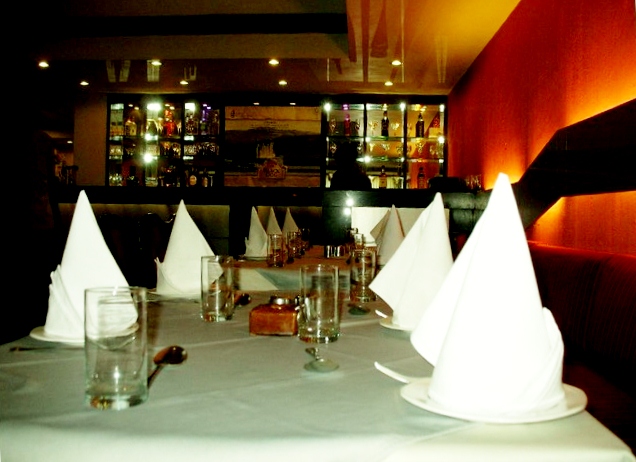
Amber was Butter Naan, Tandoori Chicken and Tikka Masala.. Rogan Josh, the rich, creamy, scarlet gravy lacing the chunks of mutton that fell off the bones. Literally. Amber was nonchalance of run-down palaces with the chipped mirrors, liveried waiters who crowded round the print of a Botticelli that I had carried as a gift for a friend. Informal, cordial and proud. “Do not under order Naans… you will need more” was a prophecy, so was the Mutton Masala which was firmly suggested as a variant to the Saag Meat that I had insisted on… for it mingled with images from a past that may not be brought forth. It tasted less seductive this time. Why was I scared of Amber? The labyrinthine darkness I remembered and the relentless honking of cars and the stray cows … not the staircase nor the chandeliers… there was an oddness about Amber, a prince in times of trouble, with disdain for the flashy. It still is, rejection of the new writ large over the narrow stairway that brought you to the north Indian succulence. A young woman, I thought, sat there in the shadows, judging, observing the family around the large table that was now hers. There were other negotiations as well… the bright red dot on the forehead and the parting of the hair resplendent red, the ill accustomed golden bangles that replaced the functional wristwatch that had survived the rough 2B years! Can a paltry Butter Naan be a metaphor for such complexities? Amber. Waterloo Street. Near Paradise cinema, no? Please tip the Usher.
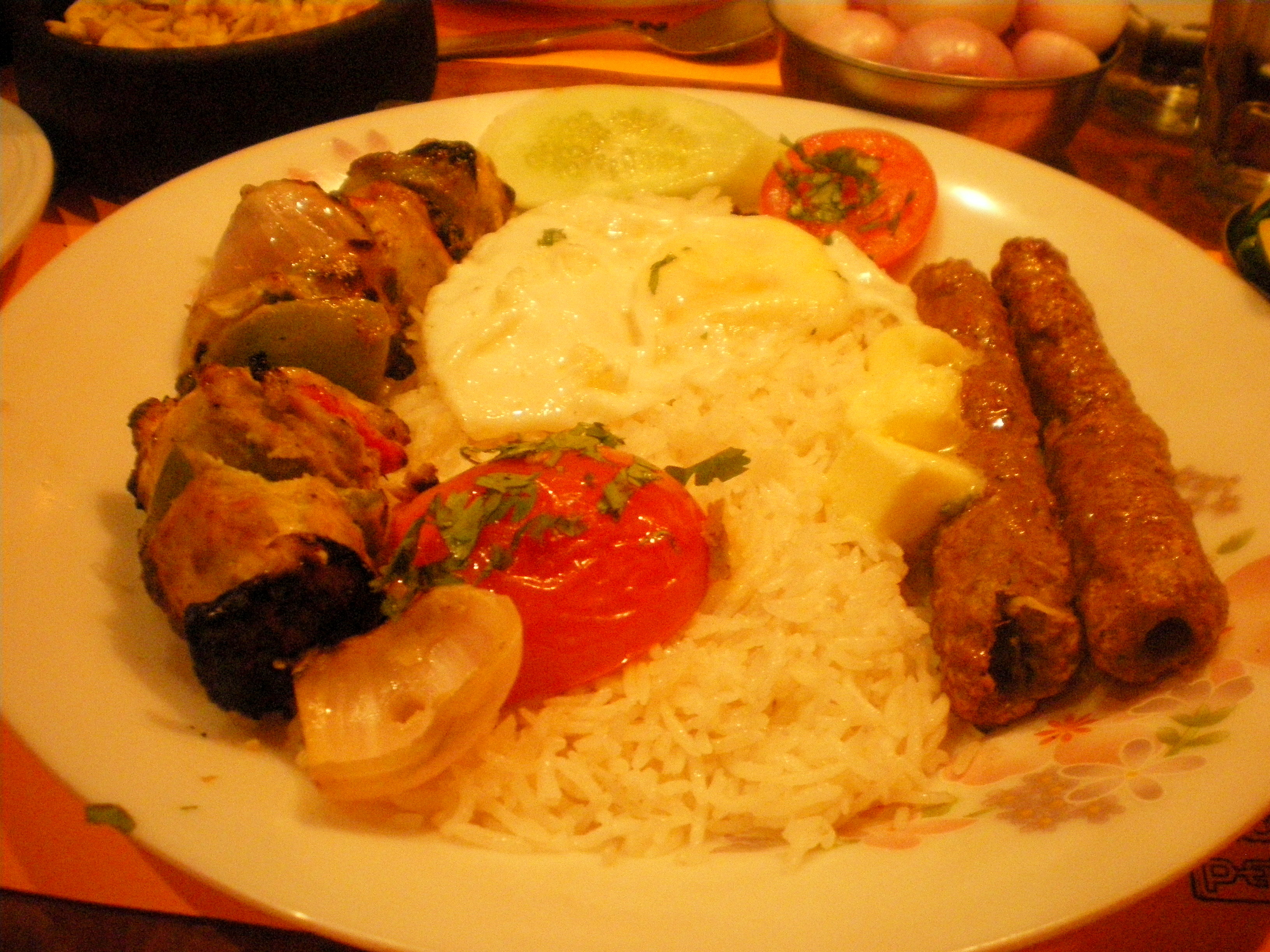
Peter Cat was different, complex. As a metaphor, I mean poised between the subjective and the historical. The original Peter was British and a cat. A resident of the Lord’s cricket ground he actually etched out his name in history as the only animal whose obituary was printed in the Wisden , the british sports journal. The one in Kolkata with its roots in the Raj nostalgia was an antithesis the the Kolkata ambience. With the sizzlers and other sins, it gave the lie to the revolutionary graffitis on the city walls, the communist paraphernalia. In short, like Mocambo, it wasn’t a hot shot from Mrinal Sen’s films and such likes. The sizzlers hissed on a wooden plank that spluttered as the waiters made their way to the tables with the planks. The buttery smell was damnation itself; so were the chunks of grilled chicken and veggies that sat smug on the plank. Under the shaded lights history was made. Nubile maidens (corporate wives in the making) met prospective grooms to impress with English small talk… ,clandestine rendezvous were also in the order of things. More of that later; then there was Chelo kabab that sat on a bed of butter rice that didn’t even remotely resemble Persian rice. But the deficiencies were hidden to a someone who was making a statement of her own: bring down cultural barriers; be at one with the different strands of life definitions, from the proletarian to the decadent declassed. The new Peter Cat… the post Stephen court one was one afternoon, after a gruelling and energizing tour of Boi Para in College Street. Honest confession: the need of the hour was chilled beer and… “Why don’t you order Chelo Kabab? We are famous for that!” looks were deceptive. The kababs were dry and the rice was lovely; so was the egg that oozed as you pitched your fork into it. The darkness was unsettling and the waiters didn’t wait after pouring out the Heineken into thick, rather uninviting glasses. As we came out, the KFC bang opposite winked at us in its crass red outfit. I wasn’t for that market. Clearly.
The Epilogue
Many ingenious lovely things are gone
That seemed sheer miracle to the multitude,
protected from the circle of the moon
That pitches common things about.
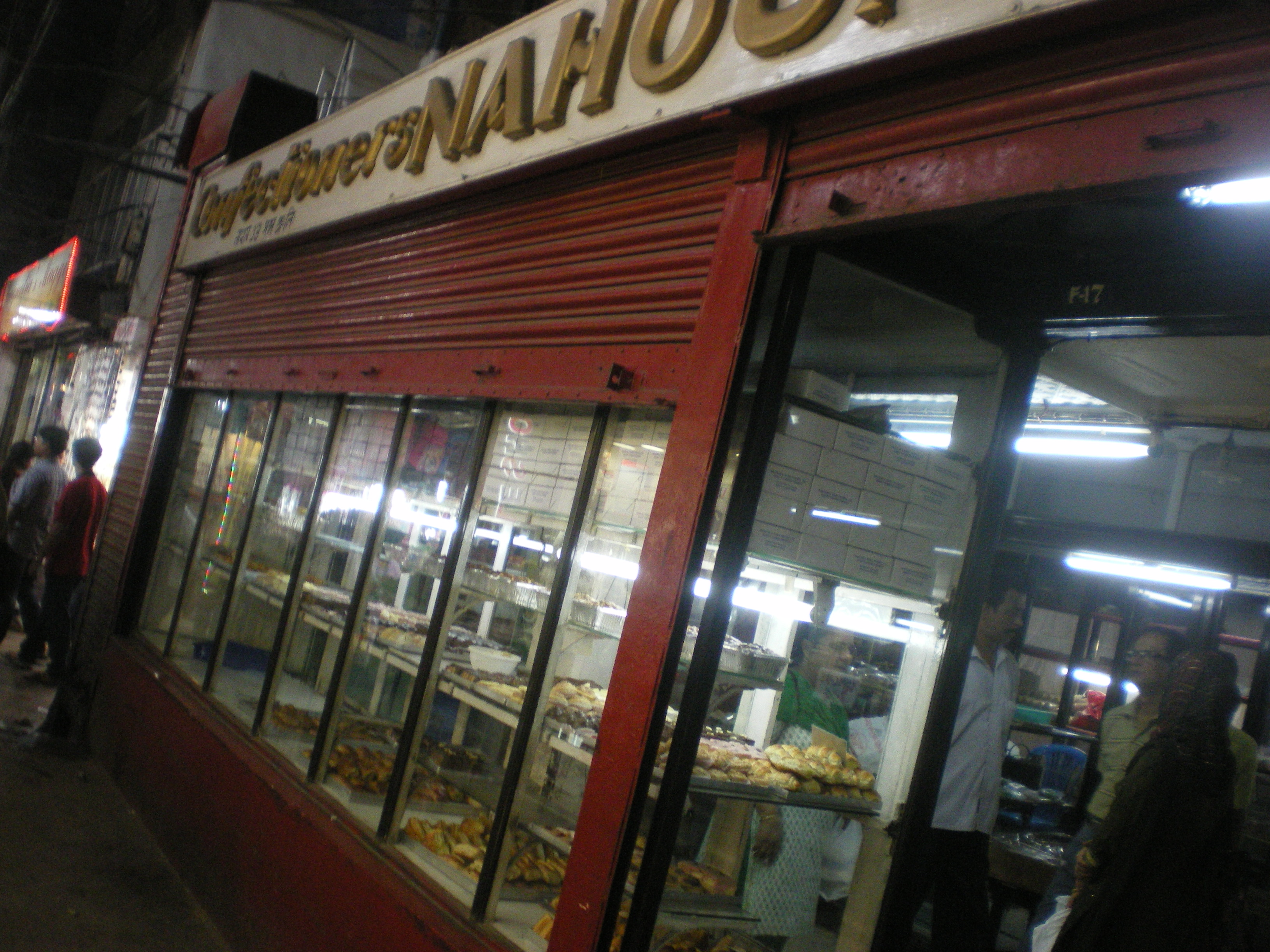
Nahoum’s. Hogg’s Market. Dark. The Eclair, Chocolate Walnut Pastry Cricket commentator Pearson Surita, Suchitra Sen, Bob Wright of Tollygunge Club, …there were Brownies too and the chocolate pastries. Rum Balls, not for children. This is scrolling up to the early seventies. A yearly visit was a ritual on the last day of the year to get an extra large box of chocolate pastries for the New Year. By some cosmic joke, it was also birthday for the little girl, who never knew how to handle the historic moment of her arrival. She still doesn’t. But chocolate pastries were ever welcome. So were the éclairs and cheese straws. Nahoum’s was shabby and arrogant and luscious. It still is. No still from ‘Chocolat’, this but you still want to click it for it is part of your exploration and arrival at… not just lovely things resplendent in the unassuming, regal glass cases. It is also your arrival at the beginning: a little girl with two pigtails.. holding firmly on to her father’s index finger, and taking in the aroma of freshly baked goodies. Just that.

Her Story

A mother felt betrayed when a father fell on the landing, developed two little blood clots in his brain and sat like the torso of a fallen tree at the edge of the sofa, looking like a pearl fisher. His grey eyes saw eternity and nothing but. He smiled sometimes when the cosmic comedy tickled a funny bone in him. Ma’s ire was first directed at God but as Omniscience could never be put on the dock, the wrath fell on the man whose shade had been her comfort. Her eyes looked accusingly at the swaying body that had been her gateway from one world to another.
Hurt by the betrayal of this fallen tree, she fell in love, one more time, with the man who was but an inconvenience even as a new groom with sandal wood dots painted on his wide significant forehead. Stories were many and changed colors like a many splendored thing. The wedding night and the consternation of her bemused father as the groom refused to change into the silk dhoti that was part of the wedding repertoire and the rejection of the pearl ring offered to him by the father –in-law. He does not feel comfortable in anything other than khaddar. Sorry, wearing a ring made things so much inconvenient, for he worked with chemicals.
****
Sheila was scared. Of falling in love with a strangeness named husband; of following him, to a remote provincial town where he taught the intricacies of Chemistry to young strapping lads of farmers and ancient landlords. He sang, not a little and made sketches with the burnt out coals that came out of the mud oven. She felt a little embarrassed by her longing for a man who defied the definition of masculinity that was her bustling, roaring father with a mustache that he wore like a flag.
The singing man sensed her unease and spread his shady branches on her. There she blossomed, learned to grow roses, cook, clean and write love letters when she would be dispatched to the comforts of her father’s sprawling mansion as the singing man immersed himself in undecipherable papers and chapters in the provincial two roomed house, balancing complex equations to prove his worth.
The green letters arrived every week bearing the village post office stamp , was smuggled into her hands by the youngest brother whose consuming matinee passion for Dame Suchitra Sen and Liz Taylor was supported by his sister’s showering silver. Strange letters they were. Palpitating with ardor. Guilt, Tenderness. Sleepless nights. “You have left a strand of your hair on the pillow, naughty girl” “Your roses need you” “Why am I thirsty in the middle of the night?”
At first her words came halting forth. Then she wrote like a man of her own sleepless nights and her crying womb. She wanted to go home. Was he eating well? Was the newly appointed cook following her instructions? Was it raining there?
*****
Blasphemy and Reconstruction. A pile of faded green letters wrapped in a wedding veil, hidden discreetly at the bottom of a pile of sarees in a wooden wardrobe. A curious daughter found them. Read a few, blushed and put them away. A strange, unsavory revelation: Fathers kissed. Mothers were women.
The letters formed a backdrop to why a woman was angry with the trunk of a tree with no leaves and no shade. The swaying trunk took away from her what she thought was hers by right: to be the queen that she was not, the artist’s model that she was not born to be. Her pride of being the centre of a universe even when she wore her glasses and marked student papers, and even when…
***
Every story begs a preamble.
Jacob married sisters Rachel and Leah, sayeth The Bible.
Leah had six sons and a daughter, but the Lord had closed Rachel’s womb. Rachel tried everything she could think of to have children.
Sheila did the same.
Sheila was Rachel.
Once in anguish, Rachel cried out to Jacob, “Give me children, or else I die”
Sheila did the same…
Until the Lord opened her womb that Rachel bore Joseph and Benjamin.
Rachel was Sheila.
Sheila’s womb was closed too. She wept.
The tree had whispered it mattered not. The nights would still be resplendent with or without a child. And her womb had opened, and a daughter had tumbled forth to steal her letters.
Sheila felt betrayed by the pearl fisher. She glared. The daughter knew why. For fathers kissed and mothers were women. And green letters from the village Post office got lost. Sheila was Rachel and Jacob turned into a trunk or a pearl fisher. That is why.
A story should not read like a poem
A man should not turn into a dead trunk
Daughters should not read stolen letters
***
A mother’s story should not read like a poem and must not be frozen in time; first he was moved to a different room and a bed that was hemmed in by bottles with strange liquids and pills and served as a throne where the man behaved like an exiled king. Dismissive-generous-smiling-nodding with occasional flashes; Startling, when he rattled off phone numbers, bank accounts and then would go back to his worry free smiling ways. Sometimes he would be a second Lear: “Pray do not mock me…” but sometimes he sang Tagore in his crumbly voice: Take from me O Lord, all that I have… and Ma would beam and ask him to sing some more. When he refused like a difficult child, she played with him.
Eeny, meeny, miny, moe,
Catch a tiger by the toe.
If he hollers, let him go,
Eeny, meeny, miny, moe.
He liked it first; then he stopped. That was the second betrayal. So she let him go and became a grey angry woman outraged by the hole the singing man left in the bed.
-“Where is Baba’s wedding dhoti”, Ma? : (a daughter fresh off the aircraft, rummaging through his things)
– “I wrapped him in it, he should wear it at least once! didn’t do the sandal wood thing. Forgot the Geeta; he didn’t care much for it anyway, but… not the Manifesto… he wouldn’t forgive me if I missed that!”
A daughter understood, for she had stolen the letters. She knew Sheila wasn’t scared anymore.
 Methinks...